
There's a moment most local businesses hit about three months into posting. The page looks decent. The work's up there. People are liking it. But the phone is doing exactly what it was doing before.
That's not a sign social media doesn't work. It's usually a sign the posts are showing people the work without ever giving them a reason, or a way, to get in touch.
This guide is about the words. What to write under the photo, how to open it so people stop scrolling, and how to ask for the enquiry without sounding like a car advert.
When someone is weighing up a quote, they will go looking for you, and for a lot of people the first place they land is a Facebook page rather than a website. It's now second only to Google as the place people go to check out a local business.
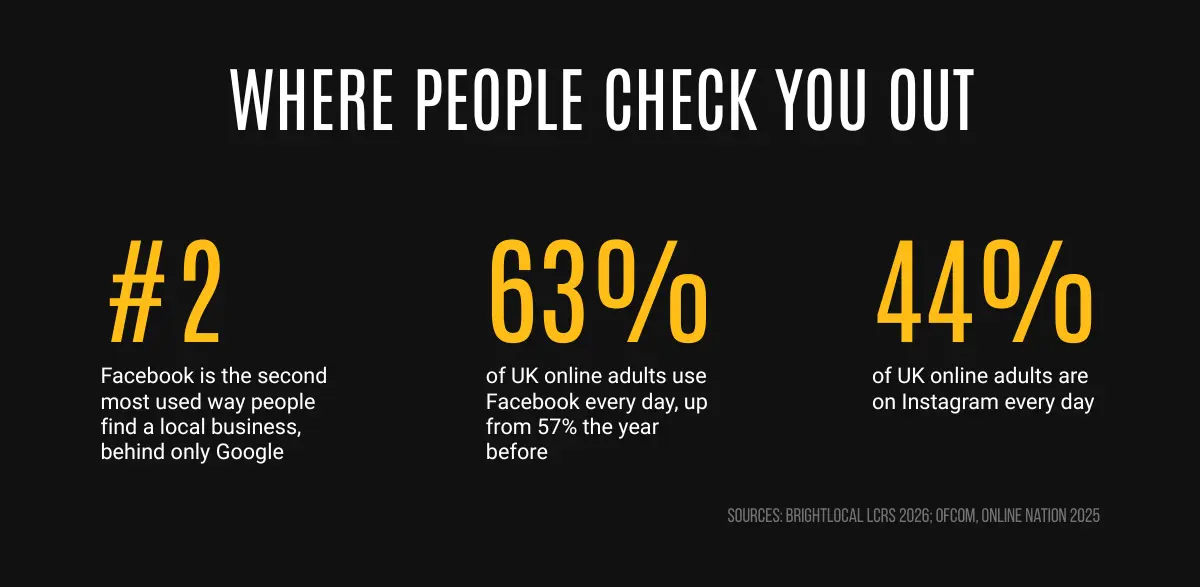
So the audience is already there and already looking. The question is whether your post gives them something to do when they land on it.
A beautiful photo of a finished bathroom with the caption "Bathroom finished in St Sampsons" is a nice post. But it assumes the reader will work out for themselves that you're available, that you do this kind of job, and how to reach you. Remember they're probably on the sofa, half-watching TV. If it takes effort, they scroll on.
Adding one plain line at the end changes the job the post is doing. Not "DM us for a free no-obligation quote today". Just: "Booking bathrooms from September. Drop me a message if you want a price."
You don't need to be a writer. You need four short parts, in this order.
Written out, a whole post looks like this:
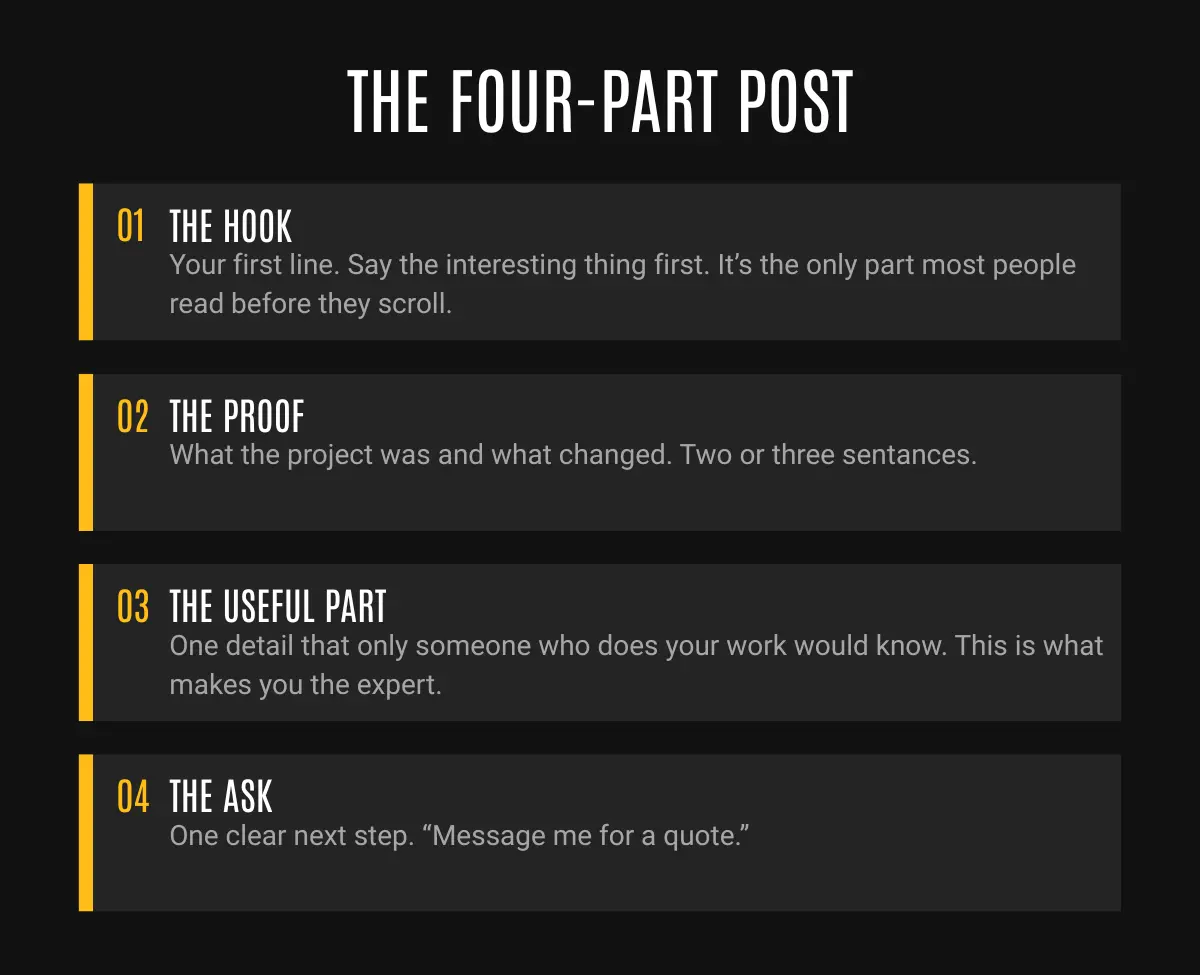
Nothing clever. Four parts, about sixty words.
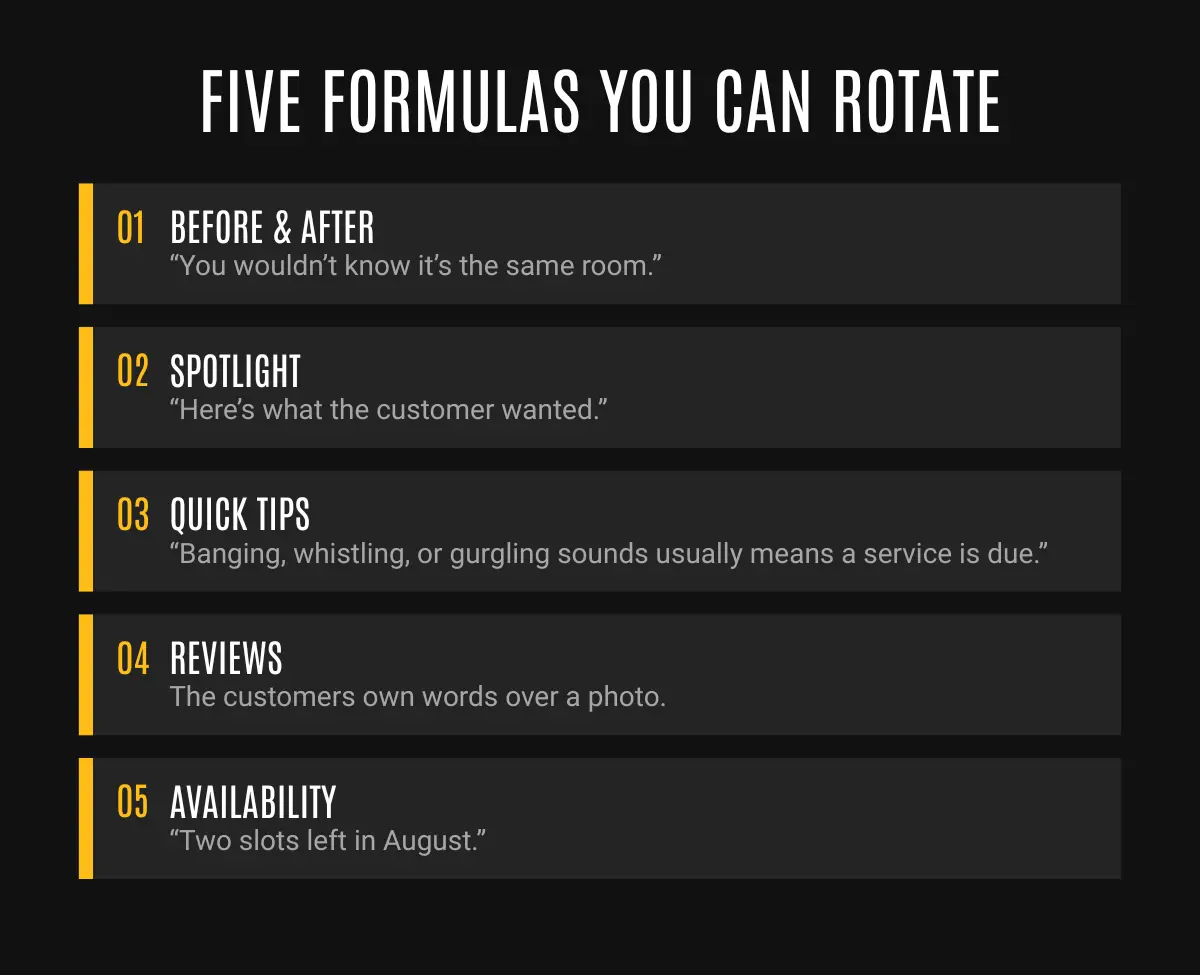
The reason posting feels hard is the blank page. Take the blank page away and it stops being hard. These five cover almost everything a local business needs, and you can cycle them for years without repeating yourself.
A rough mix that works: mostly work and tips, an availability post every few weeks, a review whenever you get a good one.
The first line is doing all the lifting, and it's where most people default to something polite and forgettable. A few patterns that tend to work for local businesses:
And a few to leave alone: "We are delighted to share...", "Another happy customer!", "Check out our latest project". They're not wrong exactly, they just tell the reader nothing, and the reader has already gone.
One more thing worth knowing. On Facebook and Instagram, only the first line or two shows before people have to tap "more". So the hook isn't just good practice, it's structurally the only bit that's guaranteed to be seen.
The ask fails for two reasons: there are too many of them, or the thing you're asking for is too big a step.
Pick one, and pick the smallest sensible one:
Whatever you choose, make sure the thing you're pointing at actually works. If the ask is "message us", check the Page's messaging is switched on and that someone sees it.
This is the highest-return, lowest-effort habit on the whole list, and almost nobody does it properly.
Buffer looked at nearly two million posts across six platforms and found that accounts which reply to comments consistently do better than accounts that don't. It's a correlation rather than proof of cause, but it's one of the strongest patterns in the data.
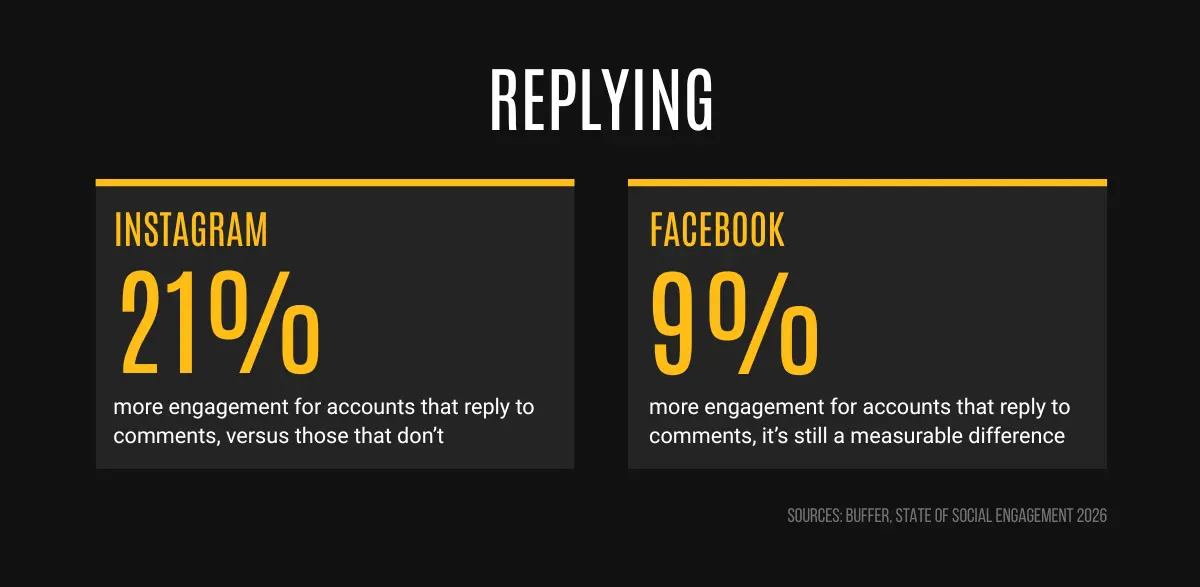
Two practical notes. Reply properly, not with a thumbs-up: "Thanks Sue" is fine, but "Thanks Sue, that one was a nightmare to get level" is better and takes five seconds longer. And when someone asks "how much for something like that?" in the comments, answer with a rough range or ask them to message you. Don't leave it hanging in public, because everyone else reading is quietly noting whether you bother to reply.
The head of Instagram has made it clear that hashtags are not a way to get more reach, and that they're mainly for telling people what a post is about. Instagram has since capped posts at five hashtags anyway, so the old wall of thirty tags is dead and gone. On Facebook they do very little either way.
What does help is writing plainly about what you do and where, in the caption itself, because that text is searchable. "Kitchen fitting in St Peter Port" in a sentence is worth more than #kitchenfitter #guernsey #kitchensofinstagram. Say the thing, don't tag the thing.
One or two posts. Ten minutes each.
Then a couple of minutes a day checking comments and messages.
Getting the enquiry is only half of it. What happens in the next hour decides whether it turns into a job, and the businesses that answer fast win a surprising amount of work purely by being first to reply. That's the next guide: what to do when an enquiry comes in.
If your pages aren't set up yet, start with Getting started with social media, and if your camera roll's empty, How to take great photos and videos of your work on your phone comes first. And if you'd rather be on the tools than writing captions on a Sunday night, that's what we do.
.png)