Back to resources
July 18, 2026
·
7 min read
·
By Josh Stephens

It's the question everyone thinks: "Do I actually need a website?"

Here's the answer most web designers won't give you: not always, and almost never on day one. You can get real enquiries with just a Google Business Profile and a Facebook page. Plenty of good businesses on the island do exactly that.

But there's a point where a website stops being a nice-to-have. This guide is about spotting that point, so you don't spend money before you need to, or get caught looking like an amateur after you should have sorted it. By the end you'll know whether you need one yet, and if you do, the short list of things it actually needs.

First: when you can wait

If you've followed our earlier guides, you've already got the two things that do most of the heavy lifting: a Google Business Profile that puts you on the map, and a social page where your finished work builds trust. For a lot of newer or smaller businesses, that combination is genuinely enough.

You can comfortably hold off on a website if most of this sounds like you:

  • You're getting a steady stream of enquiries from your Google Profile and word of mouth.
  • Your work and reviews are already on show somewhere people can find them.
  • You're busy enough that your problem is doing the jobs, not finding them.
  • You're brand new and still working out what you offer and who for.

If that's you, don't let anyone guilt you into a website you don't need yet. Get your Profile and your social ticking over first. It's free, it's faster, and it's where the early wins are.

When a website earns its place

The flip side. There's a stage most businesses reach where a website stops being optional and starts paying for itself. Having one is the norm now, not the exception, and being the only firm without one increasingly makes people wonder why.
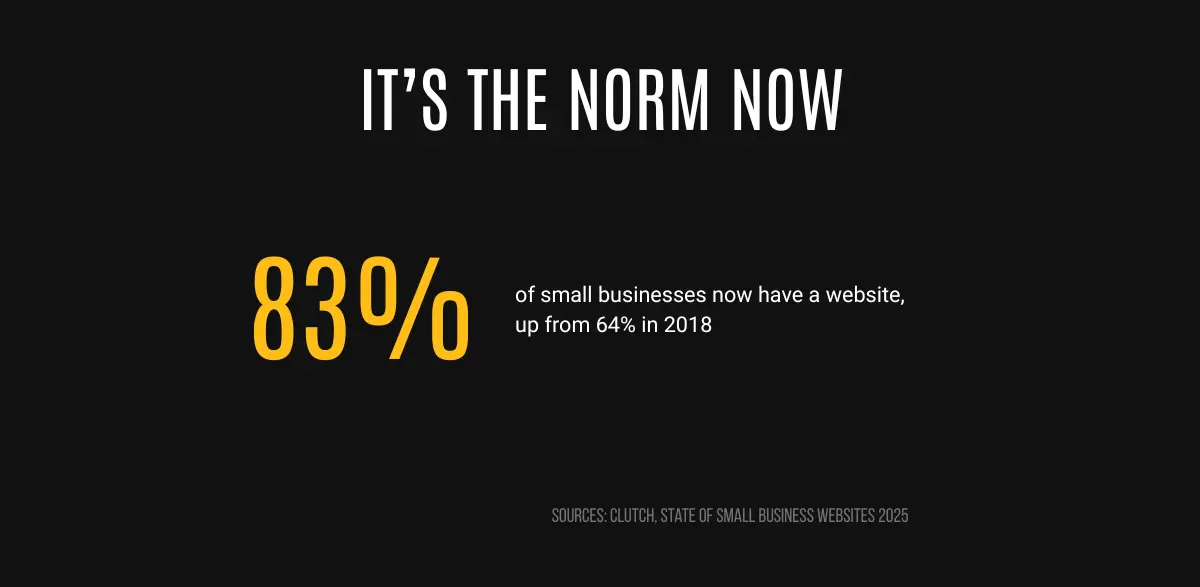
83% of small businesses now have a website, up from 64% in 2018

More usefully, here are the real signs you've hit that stage:

  • You're competing on bigger jobs. The bigger the spend, the more people want to check you out properly before they call. A kitchen or a full rewire gets researched harder than a dripping tap.
  • People keep asking the same questions. If you're answering "do you do X / can I see examples" over and over.
  • You're losing to competitors who look more established. When two quotes are close, the business with a smart, professional site can often tip the scales.
  • You want to stop renting your online shopfront. Facebook can change its rules overnight. A website is the one bit of your online presence you actually own and control.

If two or three of those ring true, it's probably time. You don't need to rush, but it's no longer something to keep putting off.
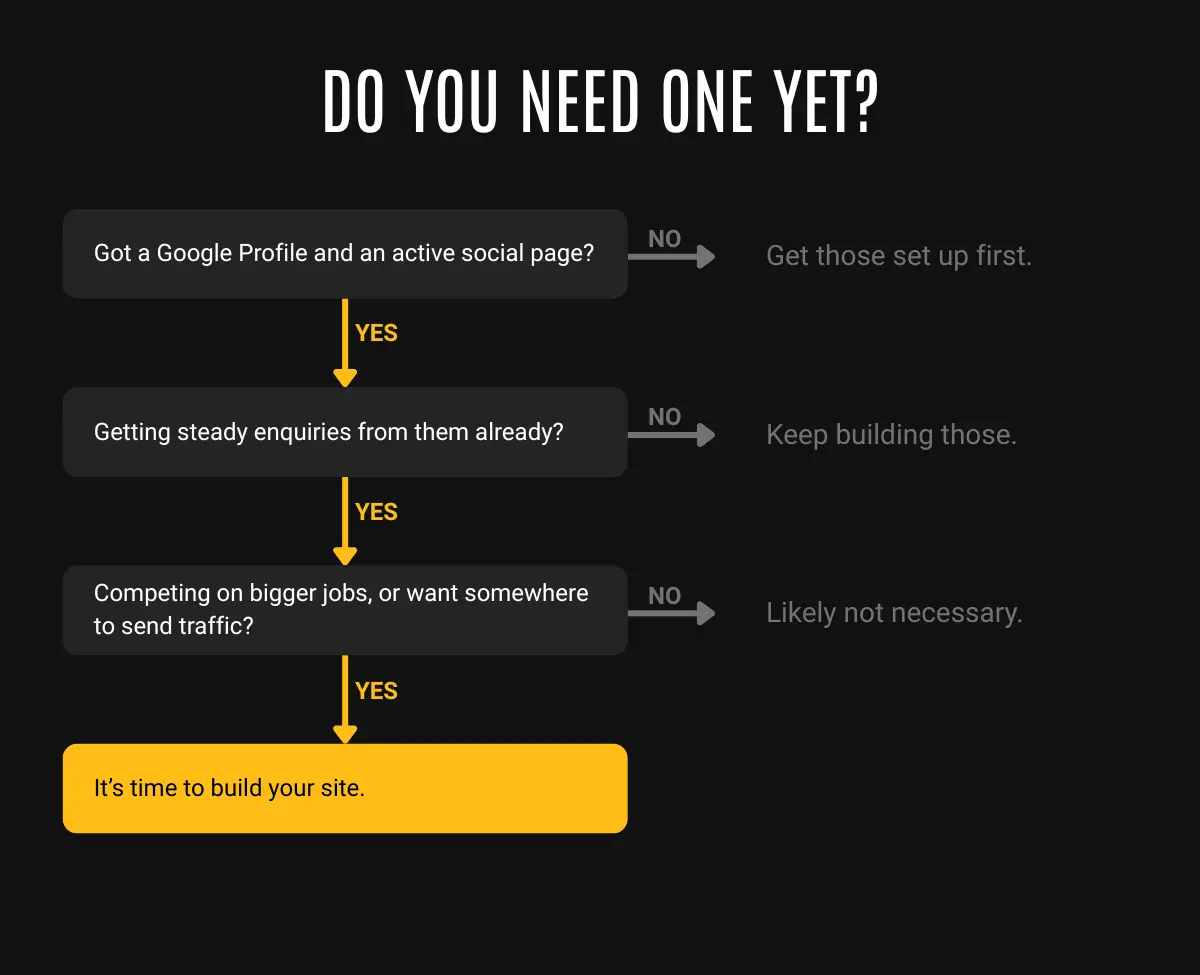
Do you need a website yet? Sort your Google Profile and social first, build once enquiries are steady

What a service business website needs

Here's the good news: a website for a local service business does not need to be big, clever, or expensive. The fancy stuff is mostly for show. What wins work is a clean, fast site that makes it obvious what you do, proves you're good, and makes you easy to contact.

If you build one, or get one built, these are the things that actually matter:

  1. A clear headline that says what you do. The second someone lands, they should know they're in the right place.
  2. Your services, in plain English. A short list of what you offer. If you offer different services, give them a section each.
  3. Proof you're any good. Photos of your work (not stock images), and your reviews pulled through where people can see them. This is the bit that does the convincing.
  4. An obvious way to contact you. Phone number visible at the top, a tap-to-call button on mobile, and a short enquiry form. Don't make people hunt.
  5. It has to work on a phone. Most people will look at your site on their phone. If it's fiddly or broken on mobile, you'll probably lose them.
  6. It has to load fast. Speed isn't a luxury.

That's it. Six things. A site that nails those will outperform a flashy one that buries the phone number on an about us page.
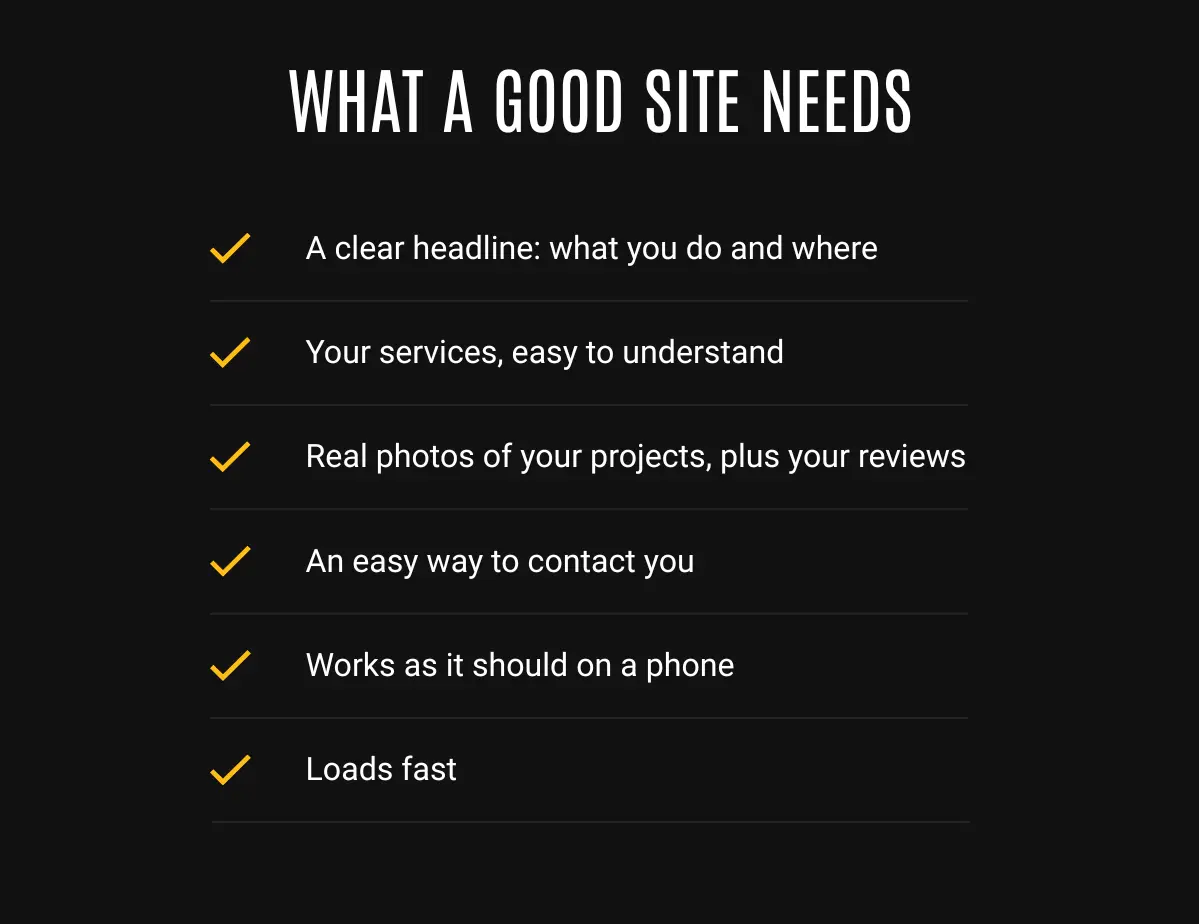
What a good trades site needs: clear headline, services, real photos and reviews, easy contact, mobile, fast

A bad website is worse than none

This is the part worth being blunt about. Having your website done badly can actually hurt you. People judge fast, and most of that judgement is about how it looks and feels in the first second or two.
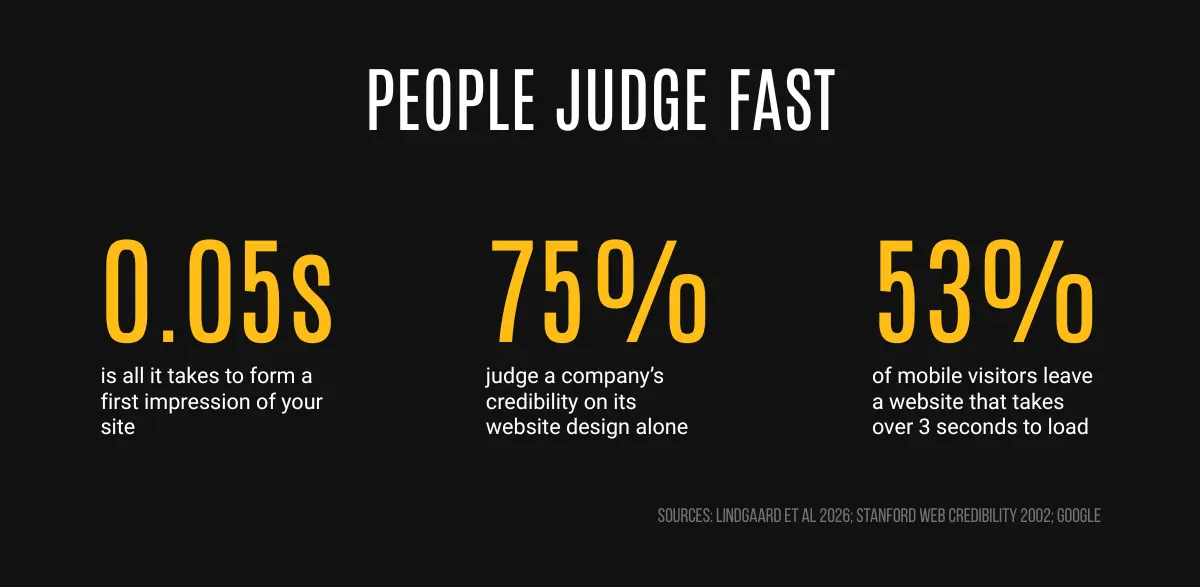
People judge fast: 0.05s to form a first impression, 75% judge on design, 53% leave if load tops 3 seconds

So the simple rule is: if you're going to have a website, have a good one. That's why a good Google Profile genuinely beats a rubbish website.

A few honest watch-outs while we're here:

  • Don't overbuild it. You don't need a blog, a booking system and ten pages to start. One to three good pages that do the seven things above are plenty. You can always add later.
  • Don't let it go stale. A site that was last updated in 2021, with old photos and outdated prices, does you no favours. If you build one, keep it fresh, the same as your social.
  • Don't pay for flash you don't need. Animations and clever effects rarely win a job. A clear phone number and good photos of your work do.
  • Do make sure you own it. Whoever builds it, make sure the domain and the site are in your name, not locked to an agency you can never leave.